
Every hiring manager we spoke to described the same pattern: two candidates with near-identical resumes walk into the same interview, and only one walks out with an offer. The difference is rarely the answer to "tell me about yourself." It's a set of habits — some obvious, some easy to miss — that show up before, during, and after the conversation.
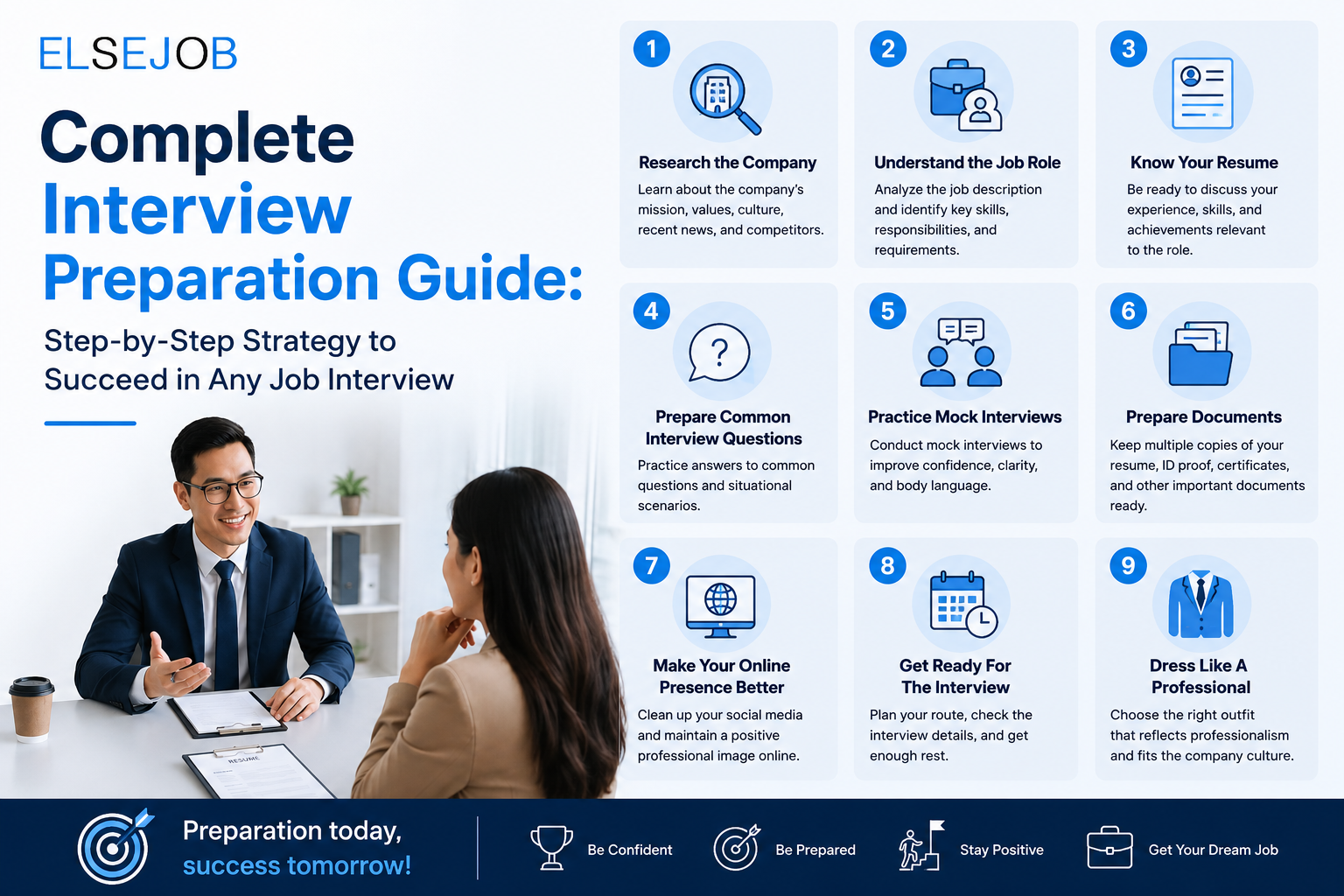
Below are the ten strategies that came up again and again, organized in the order you'll actually use them: preparation, performance, and follow-through.
- Preparation
- 38%
- Communication
- 27%
- Role fit
- 22%
- Follow-up
- 13%
1. Research the team, not just the company
Anyone can recite a company's mission statement. What stands out is knowing who you'd actually be working with — the team's recent projects, the manager's background, and how the role fits into what the department is trying to solve this quarter. LinkedIn and the company blog usually get you 80% of the way there.
2. Rehearse out loud, not in your head
Thinking through an answer and saying it out loud are different skills. Candidates who record themselves answering common questions — even just on their phone — consistently sound more composed than those who only mentally rehearse.
The candidates who stand out aren't the ones with the most experience. They're the ones who clearly understand the problem we're trying to solve and can explain, specifically, how they'd help. — Hiring Manager, Fintech, Bengaluru
3. Structure stories with the STAR method
Situation, Task, Action, Result. It sounds like a cliché because it works: interviewers are mentally taking notes, and a story with a clear structure is far easier to remember — and far easier to score well — than a meandering answer.
A quick example
Instead of "I'm good at managing deadlines," try: "Our team was two weeks behind on a client migration (Situation). I was asked to re-sequence the remaining tasks (Task). I identified three steps that could run in parallel and reassigned two of them (Action). We delivered four days early (Result)."
4. Ask questions that reveal you've been listening
Generic questions ("What's the company culture like?") signal a copy-pasted question list. Sharper questions reference something the interviewer said ten minutes earlier — "You mentioned the team is rebuilding the onboarding flow; is that the immediate priority for this role?" That kind of question does double duty: it shows attentiveness and gathers information you actually need.
5. Dress one notch above the team, not the industry
"Company culture" advice online is often outdated. The more reliable signal is what the interviewing team itself wears day to day — visible on their LinkedIn photos or office videos — and then dressing slightly sharper than that baseline.
6. Handle resume gaps directly, not defensively
A gap explained in one calm sentence rarely costs a candidate the offer. A gap that's clearly uncomfortable to discuss raises more questions than the gap itself. Prepare a short, factual line and move on.
7. Don't dodge the salary conversation
Recruiters repeatedly mentioned that candidates who research a realistic range in advance — and state it confidently when asked — are easier to move forward with than those who deflect the question entirely, since deflection often just delays a mismatch that surfaces later.
8. Treat virtual interviews as a separate skill
Lighting, camera angle, and a stable connection aren't cosmetic details — panel interviewers told us technical friction in the first two minutes of a video call measurably affects their first impression, independent of the actual answers given.
9. Close with a specific, forward-looking statement
Instead of a generic "thank you for your time," the strongest closes name something concrete: "Based on what you've described about the Q3 roadmap, I'd want to focus first on [specific area] — happy to share more detail if useful." It reframes the interview's final seconds around contribution, not gratitude.
10. Send a follow-up email within 24 hours
Not a generic thank-you — a follow-up that references a specific moment from the conversation and adds one thing you didn't get to say. Recruiters describe this as a genuine tie-breaker between two similarly strong candidates.
The takeaway
None of these strategies require more talent than you already have. They require more preparation than most candidates are willing to put in — which is exactly why they work.