
Interview preparation is an important step when you are looking for a job. No matter how much experience you have, being able to talk about your skills, communicate well, and show confidence can make a big difference in whether or not you get hired. Many people think interviews are only about answering questions, but they are really about showing the employer why you are a good fit for the job.
In today’s competitive job market, where opportunities include remote jobs, multinational companies, and startups, preparation is essential. Employers are not only evaluating your technical abilities but also your communication skills, problem-solving approach, and professionalism.
This guide will help you prepare for interviews step by step. By following these strategies, you can attend interviews with confidence, clarity, and professionalism.
Why Interview Preparation Matters
Interview preparation is extremely important because it helps you present yourself effectively to employers. Many candidates try to answer questions without preparation, which often leads to unclear responses and nervousness. Preparation allows you to confidently explain your abilities and achievements.
From an employer’s perspective, interviews are about making the right hiring decision. They want to know whether you can perform the job, work well with the team, and contribute to the company’s growth. When you prepare properly, your answers become more structured, relevant, and convincing.
Preparation also reduces interview anxiety. Knowing what to expect and practicing your responses helps you stay calm and communicate more effectively during the interview.
In a competitive hiring process, preparation gives you an advantage. If two candidates have similar qualifications, the better-prepared candidate usually leaves a stronger impression.
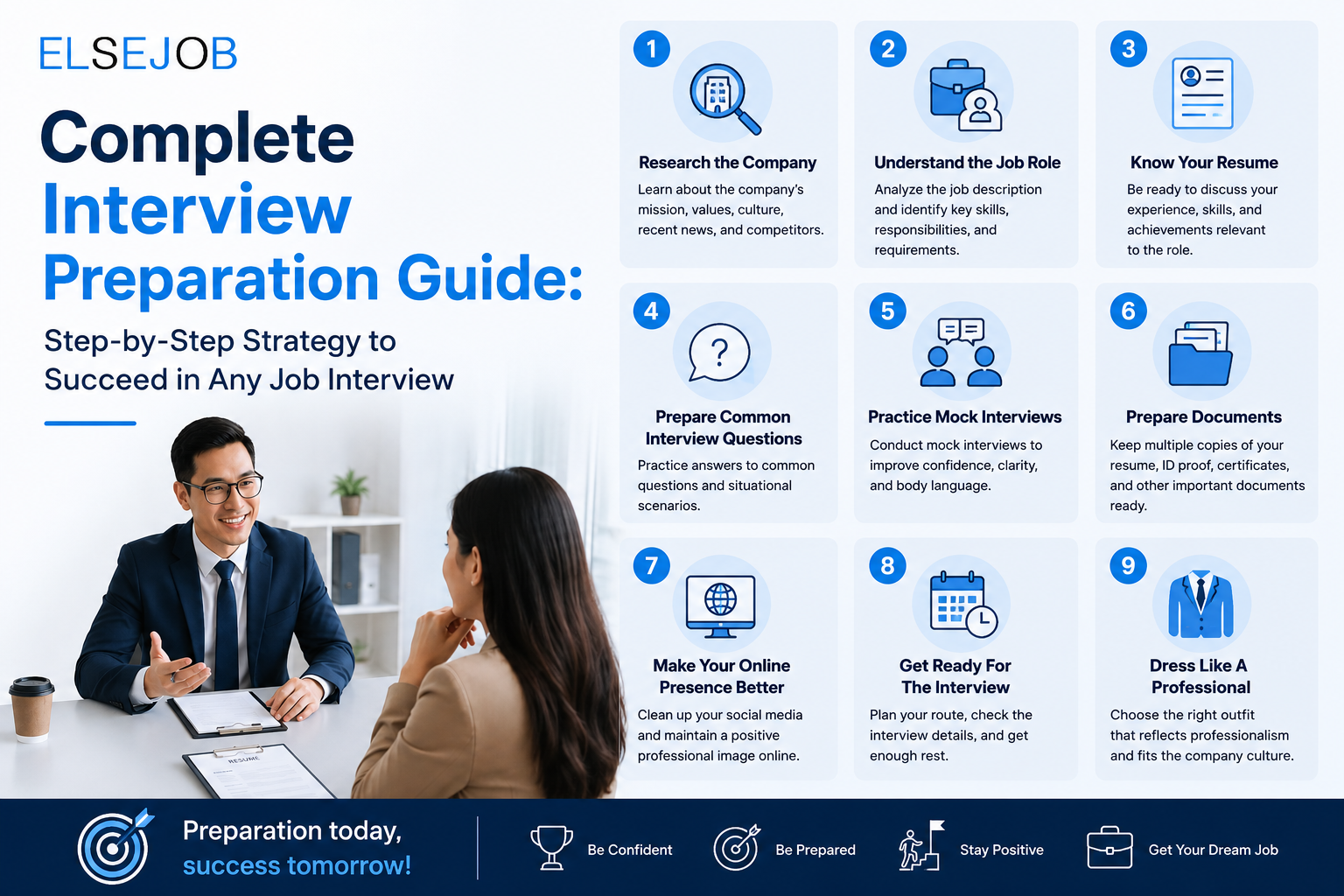
Step 1: Research the Company
Researching the company is one of the most important parts of interview preparation. Simply visiting the company website is not enough. You should understand the company’s business model, products, services, customers, and overall mission.
Start by learning how the company operates and what makes it unique. Explore its website, blog, and social media profiles to understand its culture and recent activities.
You should also look for recent company updates, partnerships, product launches, or achievements. This shows the interviewer that you are genuinely interested in the organization and its future.
Use your research during the interview. For example, when asked why you want to work there, you can mention specific aspects of the company that attract you.
Step 2: Understand the Job Role
Understanding the job role is essential for giving relevant answers during the interview. Many candidates only read the job description once, but you should carefully analyze it.
Break the job description into key responsibilities, required skills, and expectations. Then connect each requirement to your own experience and achievements.
For example, if the role requires teamwork, think of situations where you successfully collaborated with others. If problem-solving is important, prepare examples where you overcame challenges.
This approach helps you provide specific and relevant examples instead of general answers. It also helps employers visualize you successfully performing the role.
Step 3: Know Your Resume
Your resume is the foundation of your interview because most questions will be based on it. Having a strong resume alone is not enough—you must also be able to explain it confidently.
A good strategy is to turn each section of your resume into a story. Instead of simply listing responsibilities, explain the situation, your actions, and the results you achieved.
Be prepared to discuss employment gaps or job changes honestly and professionally. Focus on what you learned and how you grew during those experiences.
Make sure your interview answers match the information on your resume. Consistency builds trust and credibility with the interviewer.
Step 4: Prepare Common Interview Questions
Preparing for common interview questions is extremely important. Instead of memorizing answers, focus on structuring your responses clearly and naturally.
Interviewers often ask questions to evaluate communication skills, problem-solving abilities, and self-awareness. For example, when they ask you to introduce yourself, they want a summary of your background, achievements, and career goals.
Organize your answers logically by discussing your current role, previous experience, and future goals. This keeps your responses focused and easy to follow.
For behavioral questions, explain the situation, your actions, and the results. This structure helps you provide detailed and meaningful answers.
Practicing these questions helps you improve clarity, remove unnecessary details, and present your experiences more effectively.
Step 5: Practice Mock Interviews
Mock interviews are one of the best ways to improve interview performance. Practicing out loud helps you identify communication gaps and build confidence.
Start by practicing in front of a mirror or recording yourself. This helps you notice habits like speaking too quickly or using filler words.
You should also practice with a friend, mentor, or colleague. Simulating a real interview environment provides valuable feedback and helps you become more comfortable answering questions.
Regular practice improves communication skills, reduces nervousness, and helps your answers sound more natural and confident.
Step 6: Prepare Documents
Keeping your documents organized shows professionalism and attention to detail. Although it may seem like a small thing, it creates a positive impression.
Carry multiple copies of your resume printed on quality paper. Also, bring relevant certificates, identification documents, and work samples if needed.
In addition to physical copies, keep digital versions stored on your phone, email, or cloud storage for easy access.
Being prepared with documents reduces stress and allows you to focus fully on the interview conversation.
Step 7: Improve Your Online Presence
Your online presence plays an important role in today’s hiring process. Many recruiters review professional profiles before or after interviews to learn more about candidates.
Make sure your professional profiles are complete and updated. Use a professional photo, write a strong summary, and highlight your key skills and achievements.
Ensure consistency between your resume and online profiles. This builds trust and credibility.
You should also review your social media accounts and remove anything unprofessional. Employers want candidates who demonstrate good judgment and professionalism.
A strong online presence acts like an extension of your resume and can help you stand out from other applicants.
Step 8: Get Ready for the Interview
Preparing all interview logistics in advance is very important. Even well-prepared candidates can face problems if they fail to plan properly.
For in-person interviews, plan your travel route and calculate the travel time carefully. Consider possible traffic or delays and aim to arrive early.
For virtual interviews, test your computer, microphone, camera, and internet connection beforehand. Choose a quiet location with proper lighting and a professional background.
When everything is prepared in advance, you can focus fully on the interview instead of dealing with unnecessary stress.
Step 9: Dress Like a Professional
Your appearance creates the first impression during an interview. Dressing professionally shows respect for the company and the interview process.
Choose clothing that matches the company culture while maintaining a professional appearance. In most cases, smart business casual attire works well.
Pay attention to grooming, hairstyle, and footwear. Small details contribute to your overall professional image.
Dressing professionally also boosts self-confidence and helps you feel more comfortable during the interview.
Frequently Asked Questions (FAQ)
Q1: How long should I prepare for an interview?
The preparation time depends on the role and company. However, spending at least 2–3 days preparing can significantly improve your confidence and performance.
Q2: What is the most important interview skill?
Clear communication and structured answers are among the most important interview skills. They help you explain your experience and abilities effectively.
Q3: Should I research the company before an interview?
Yes, researching the company is essential. It helps you give more relevant answers and demonstrates a genuine interest in the organization.